A word from Arabian falconry
Qarmousha قرموشة
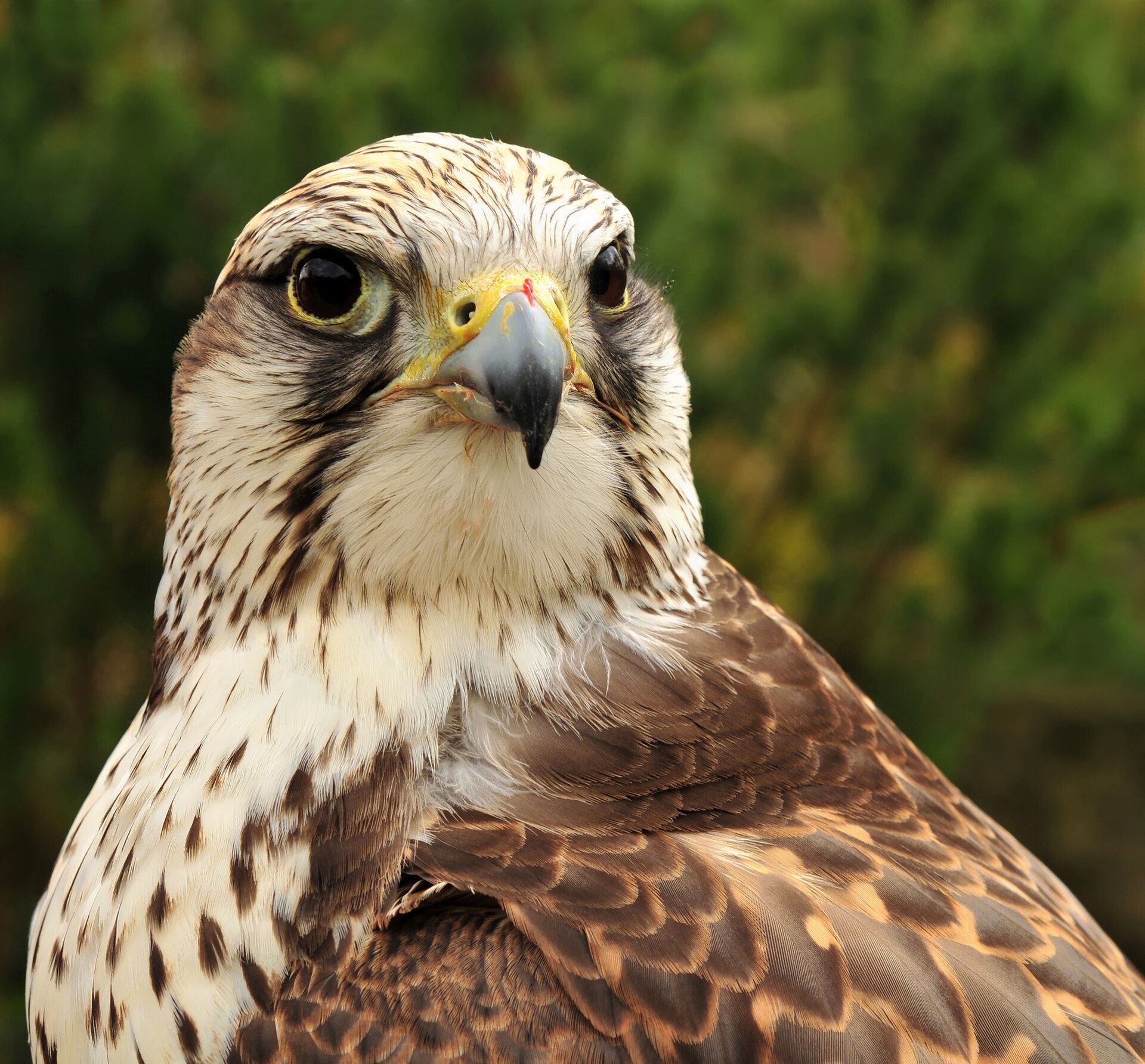
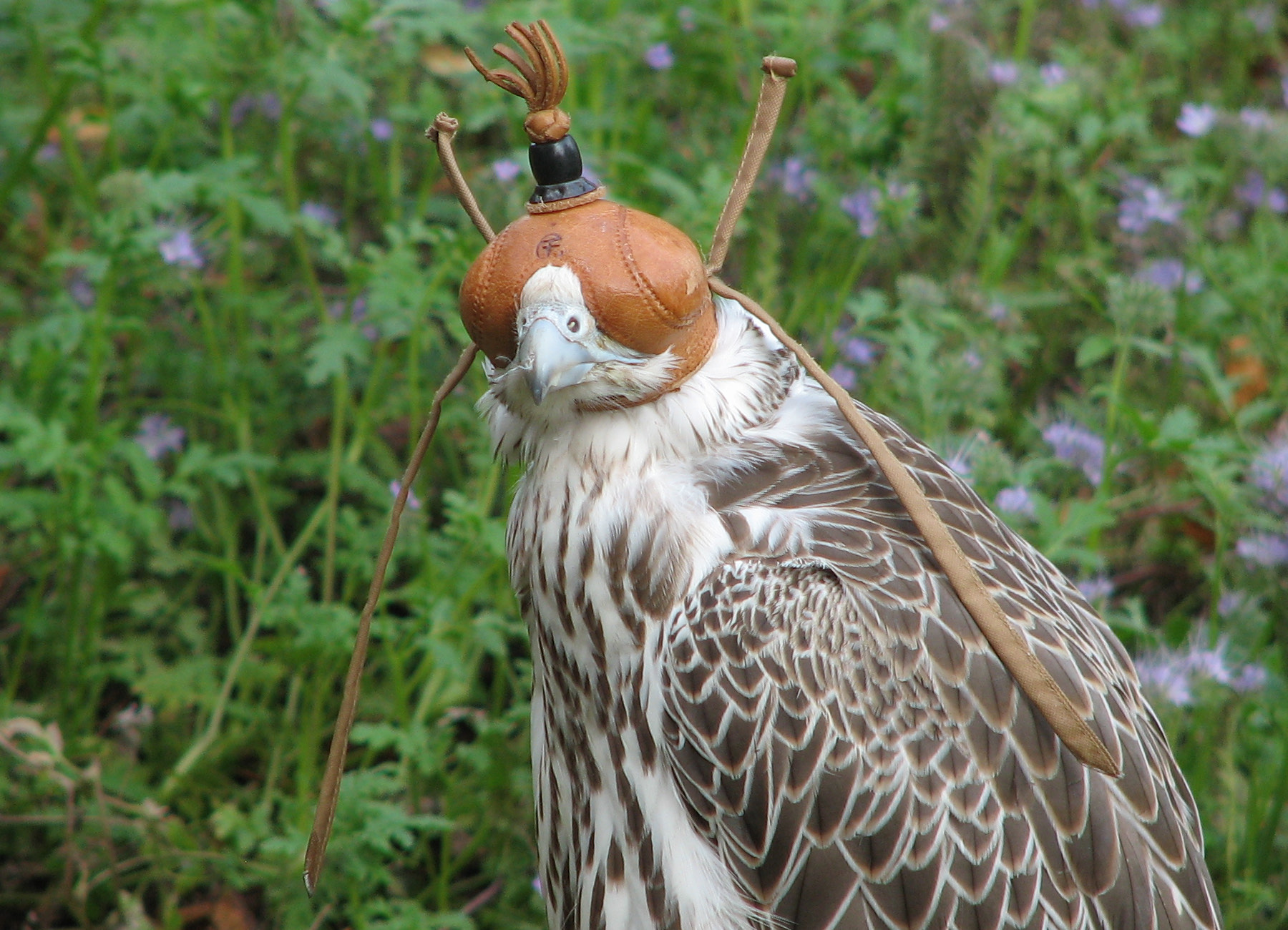
In the language of Arabian falconry, a qarmousha is a falcon taken in her first year — still in juvenile feather, before her first moult. Untamed. Unproven. Everything still ahead of her.
01 — Meaning
A word with a bloodline
Qarmousha is not an invented word. It has been spoken across the Gulf for generations, in a trade where getting the word right matters.
Falconers do not have one word for falcon. They have a word for the bird taken from the nest, a word for the bird trapped on passage, a word for the bird that has already survived a moult in the wild. Each carries a different price, a different temperament, a different set of expectations. Qarmousha is the young one — first-year plumage, no history, everything still ahead of her.
The distinction is practical rather than poetic. A first-year bird has learned nothing yet and no bad habits either, which is exactly why she is prized — she takes the shape of whoever trains her.
noun · Arabic قرموشة
In Gulf falconry, a falcon captured in her first year, still wearing juvenile plumage — before the first moult that turns her feathers adult.
From the vocabulary of Gulf falconry · still in daily use
02 — The Falcon
Built entirely for the dive
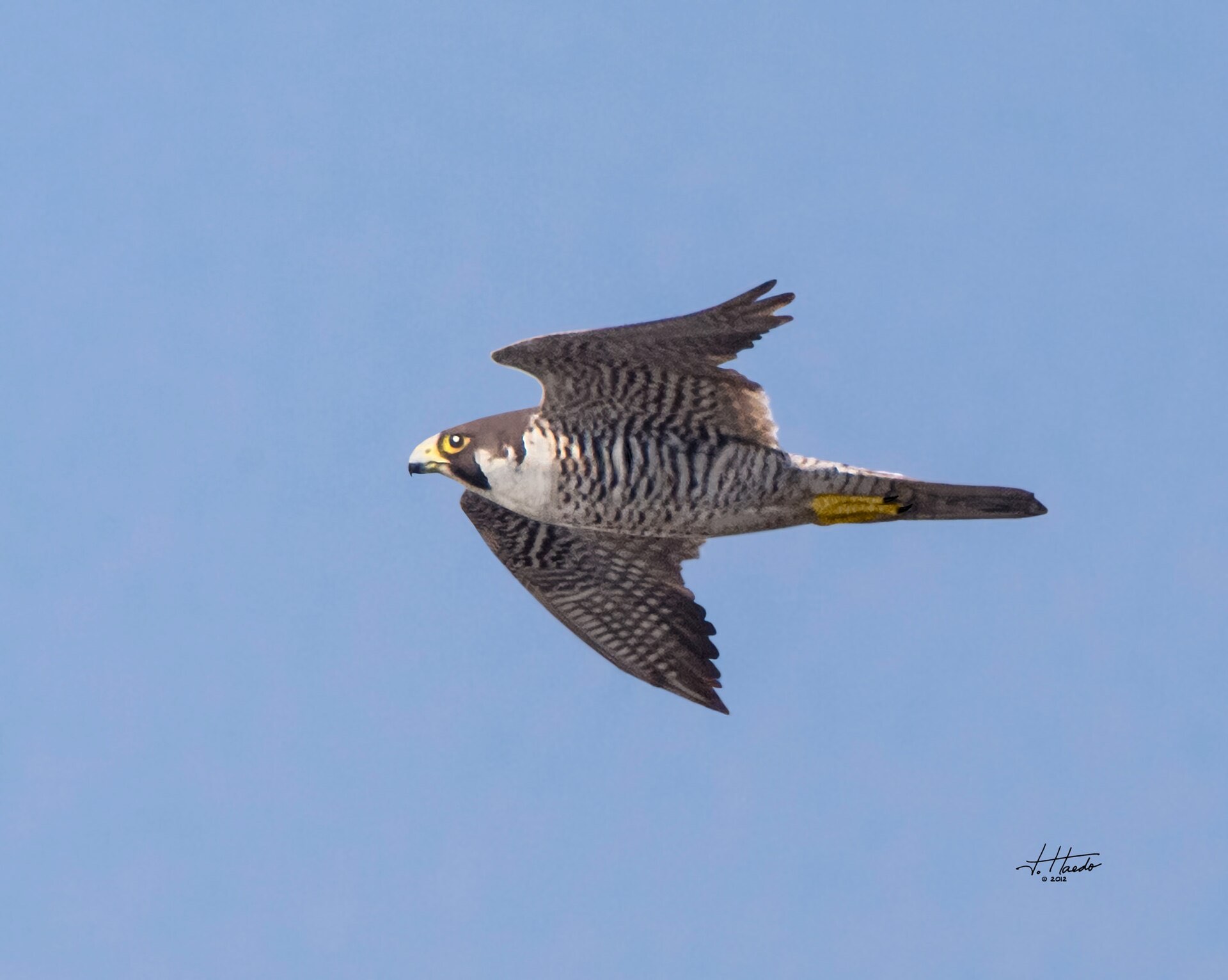
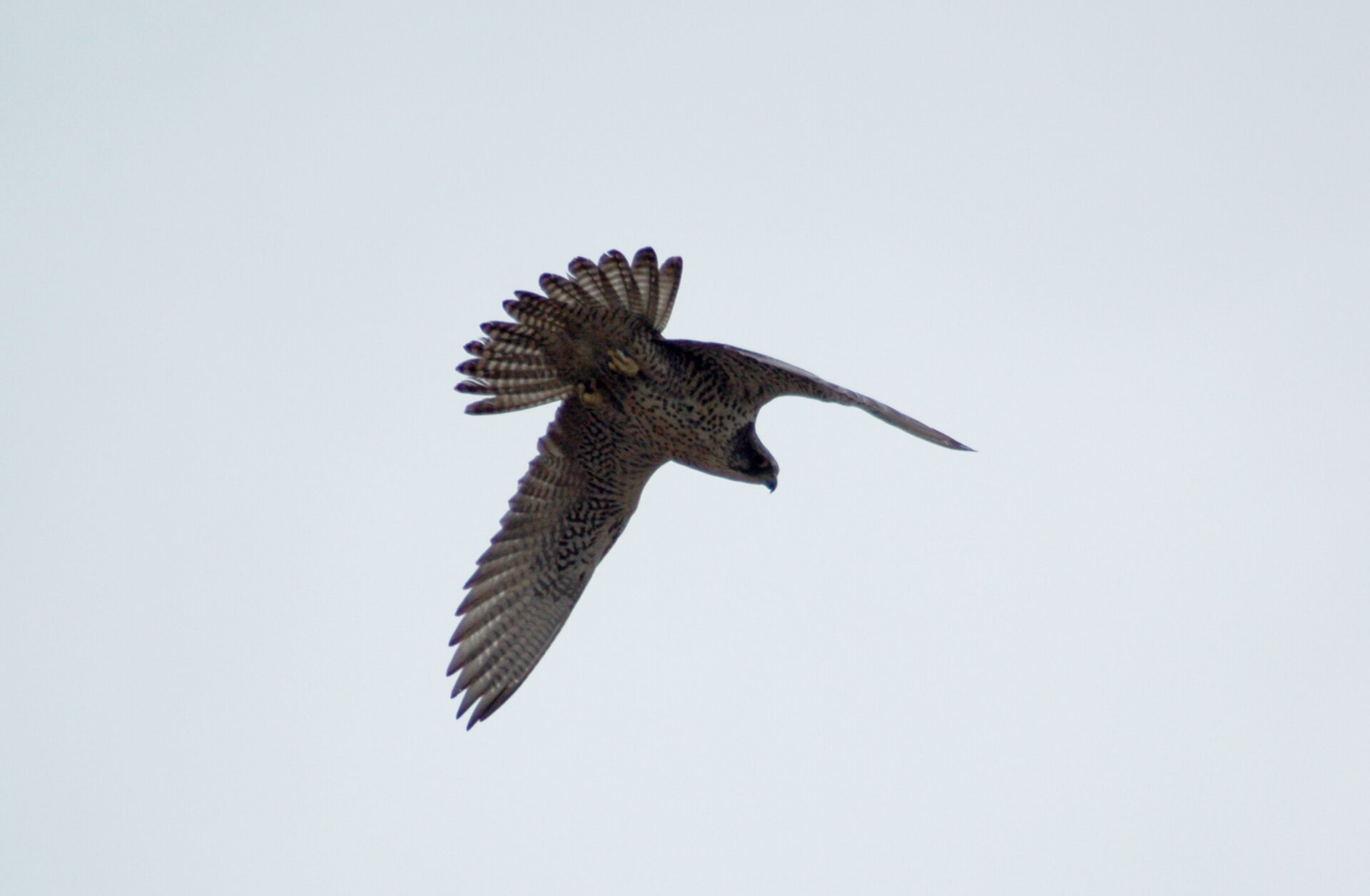
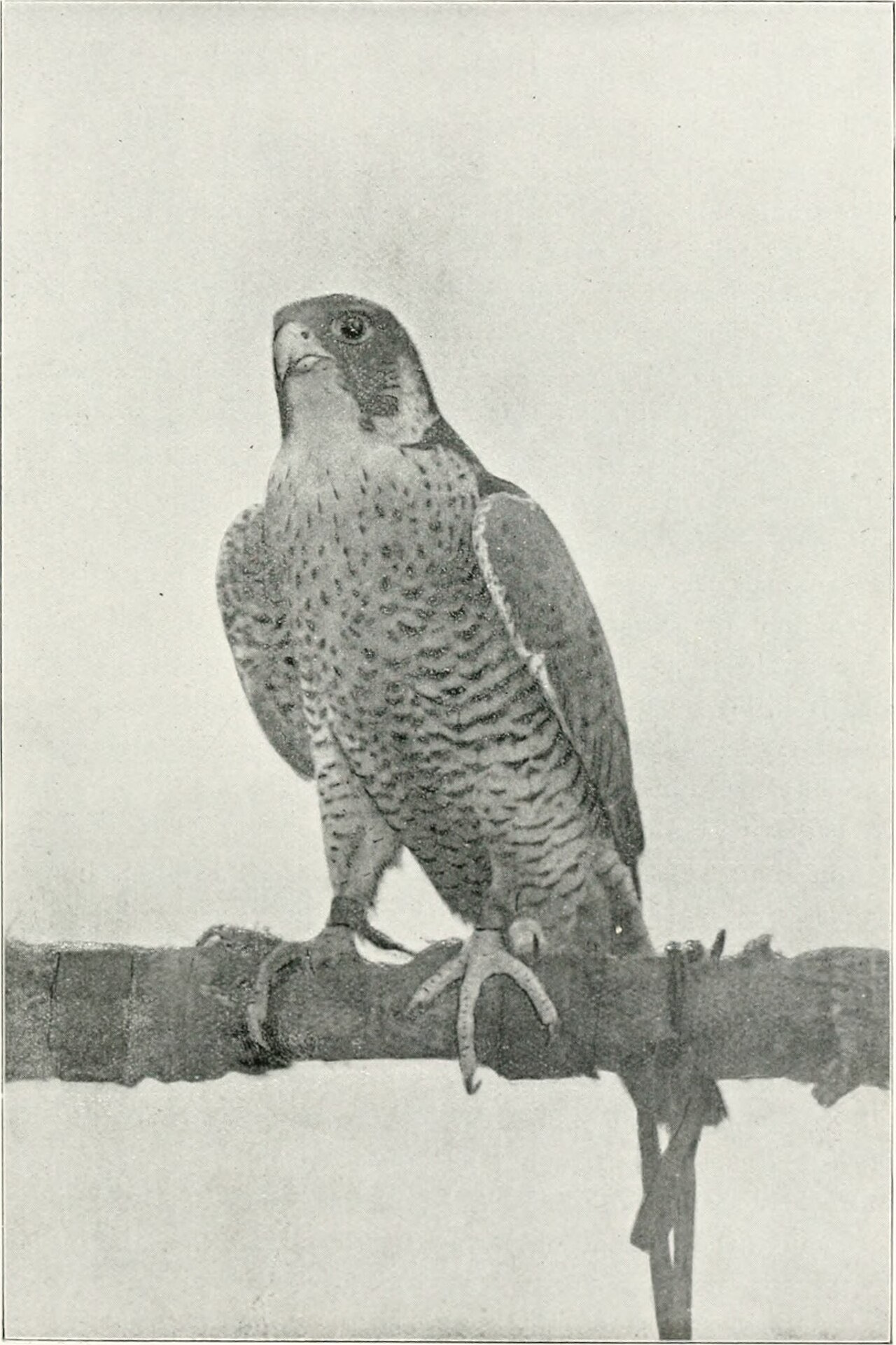
The falcon's reputation is not decorative. It is the fastest animal on the planet, and it has been working alongside people for roughly four thousand years — long enough for an entire vocabulary to grow up around it.
Speeds recorded in a peregrine's stoop — the fastest movement of any animal on Earth.
Roughly how long humans have hunted with trained birds of prey, from Central Asia outward.
Co-inscribed falconry on UNESCO's list of the Intangible Cultural Heritage of Humanity.
The falcon on the emblem of the United Arab Emirates — a symbol before it is a species.
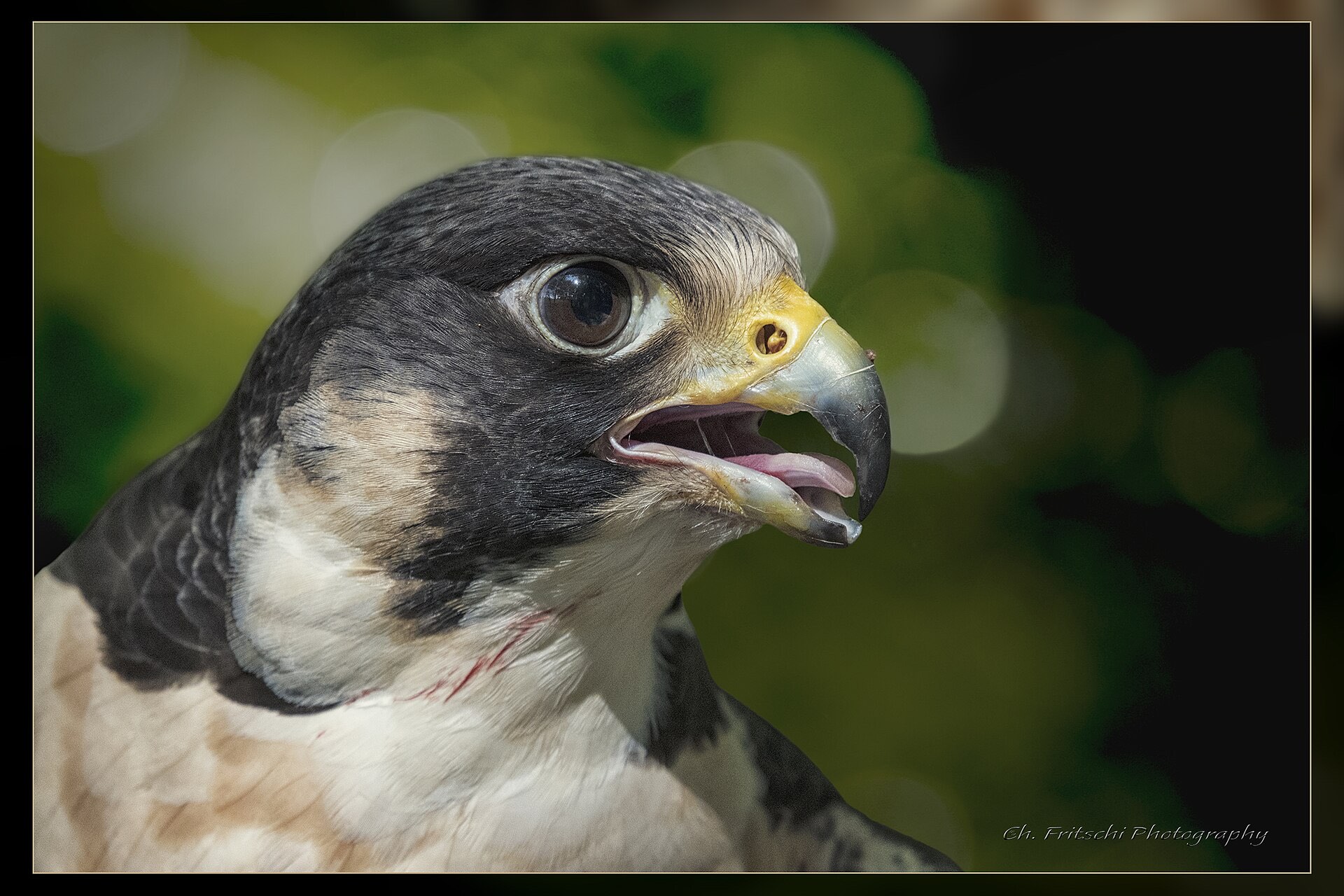
- A baffle in each nostril. A small bony cone slows incoming air so the bird can still breathe at full diving speed.
- A notched beak. The tomial tooth — a blade in the upper mandible, used at the neck rather than the talon.
- A third eyelid. A translucent membrane sweeps the eye clean mid-stoop without ever closing it.
- Sight beyond ours. Deep foveal pits and dense photoreceptors give a resolving power our eyes cannot approach.
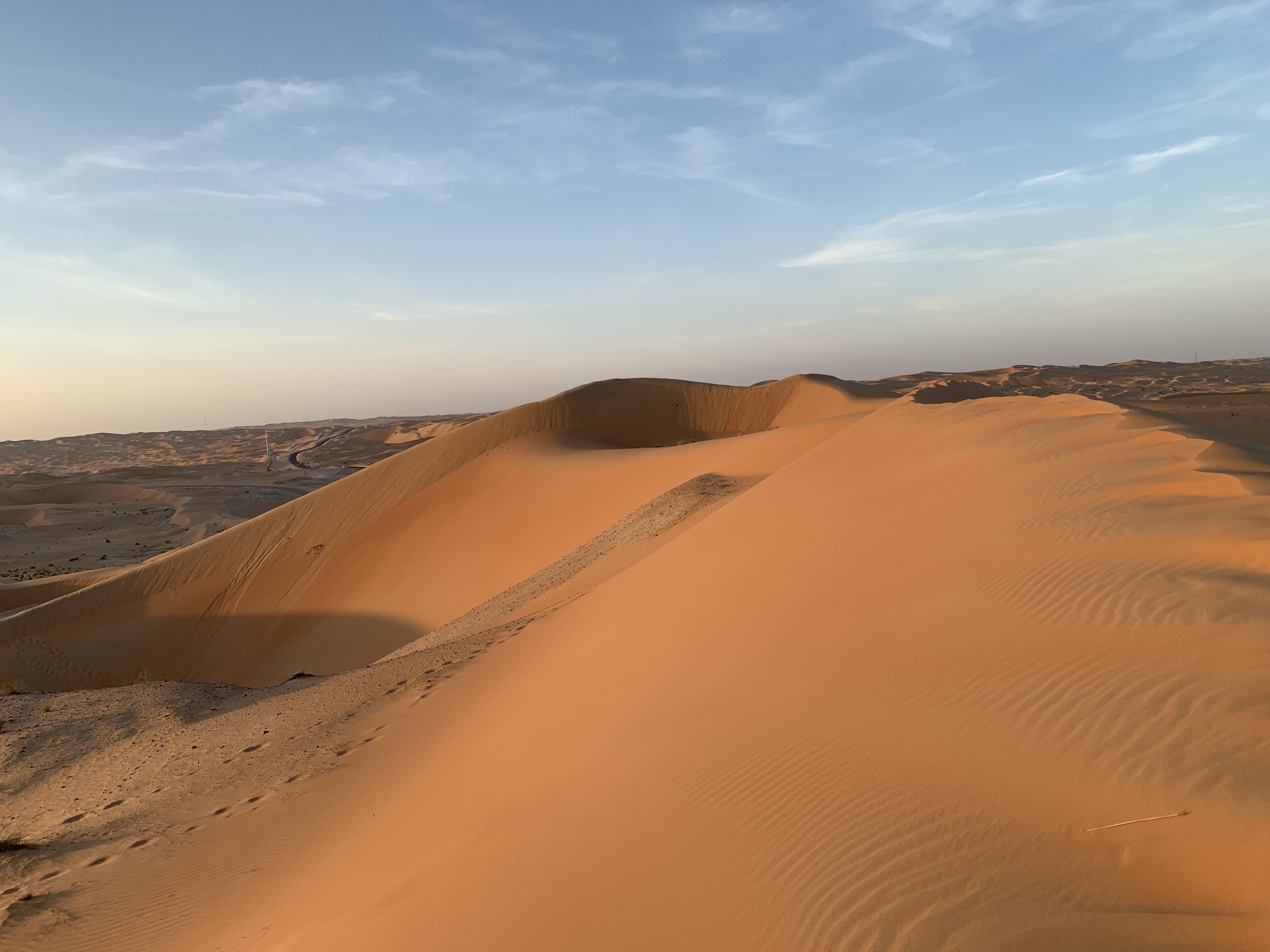
The desert rewards patience and punishes noise.
Falconry is built entirely on the first.
03 — Heritage
A living tradition, not a dead metaphor
Falconry is one of the few practices UNESCO recognises as living heritage shared across borders — inscribed in 2010 and expanded since, with two dozen states from Mongolia to Morocco to the Emirates listed together.
In the Gulf it never became a museum piece. Falcons travel with their own documents, ride in aircraft cabins, and are treated at dedicated hospitals. Hoods are still stitched by hand. The vocabulary — including this word — is still current.
That is the part worth holding onto. A word survives only as long as people have a use for it, and this one is still doing its job — in the field, on the perch, in conversation between people who have never needed a website to keep it alive.
04 — The Domain
Why this page exists
I registered qarmousha.com because the word stayed with me. This page is here so that anyone who types it in finds the word explained, rather than a parking page full of advertising.
The name is also available, though I am in no hurry to part with it. If it turns out to be the right one for something you are building, say hello. Otherwise the falcons were the point, and you have already had them.
05 — Contact
Let's talk
Questions about the word, corrections from anyone who knows the tradition better than I do, or an enquiry about the domain — all equally welcome. I read everything and reply to anything that isn't a form letter.
Prefer email? hello@qarmousha.com